

Los Angeles, January 23, 2026
Los Angeles has approved the Sepulveda Transit Corridor project, a significant advancement in public transportation aimed at alleviating traffic through the Sepulveda Pass. The underground heavy-rail line will span approximately 13 to 14 miles, connecting key areas from the San Fernando Valley to the Westside, with plans to minimize congestion and enhance travel efficiency. The initiative seeks to secure additional funding while engaging with the community to address environmental impacts, setting the stage for improved connectivity and economic growth in the region.
Los Angeles Launches Multibillion-Dollar Transit Tunnel Project
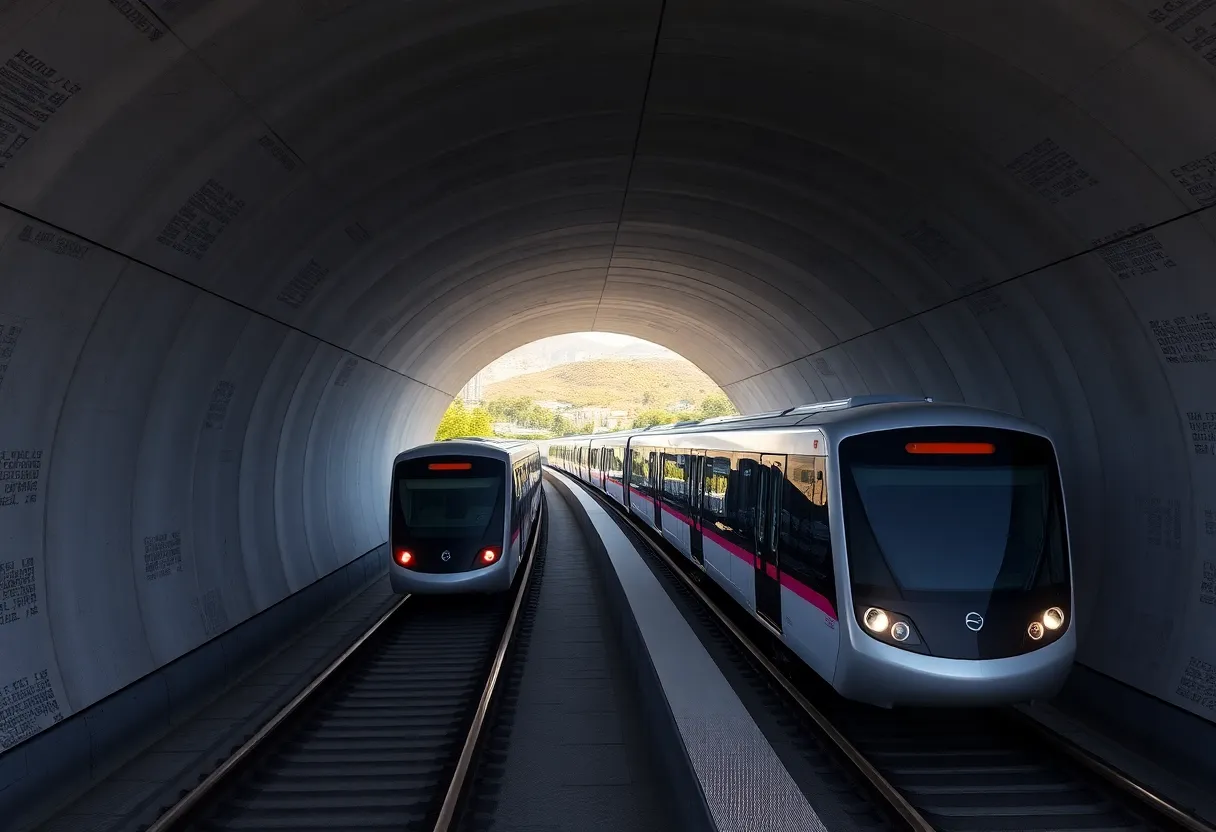
Los Angeles, CA — On January 22, 2026, the Los Angeles County Metropolitan Transportation Authority (Metro) Board of Directors approved the Sepulveda Transit Corridor project, marking a substantial advancement in public transit infrastructure. This initiative aims to ease chronic traffic congestion in the Sepulveda Pass by constructing an underground heavy-rail line through the Santa Monica Mountains, creating a faster transit option between the San Fernando Valley and the Westside of Los Angeles.
Project Overview
Known as Modified Alternative 5, the approved plan details an underground heavy-rail alignment stretching approximately 13 to 14 miles. The route will originate from the Van Nuys Metrolink Station and traverse through Sherman Oaks, deep below areas such as Bel-Air and Beverly Crest, with a pivotal stop at UCLA, concluding at the E Line (Expo)/Sepulveda Station on the Westside. This new transit option is set to significantly minimize reliance on the heavily congested Interstate 405 freeway, enhancing travel efficiency for countless commuters.
Funding Pathways
While the project has secured an initial $3.5 billion through voter-approved local funding sources like Measure M and Measure R, the road ahead requires substantial additional funding. Metro officials are exploring opportunities through state, local, and federal funding, along with potential private-public partnerships. The anticipated completion date for the transit project is between 2033 and 2035, but this timeline hinges on successful fundraising efforts and development progress.
Community and Environmental Engagement
Metro has underscored the importance of incorporating community voices and environmental considerations into the project’s design. The agency has released a Draft Environmental Impact Report (DEIR), evaluating multiple construction alternatives and generously engaged the public, receiving over 8,000 comments during the process. By opting for deep tunneling techniques, the project aims to limit surface disruption while addressing concerns regarding construction noise and vibrations, demonstrating a commitment to responsive community outreach.
Context of the Sepulveda Pass
The Sepulveda Pass has long posed a significant challenge for commuters, witnessing over 330,000 vehicles passing through daily. With its dense traffic patterns, it creates a compelling case for innovative transit solutions. The construction of this tunnel reinforces a commitment to investing in Los Angeles’ transportation infrastructure, aiming to set forth sustainable and efficient alternatives to an overcrowded freeway system. As urban populations surge, the demand for reliable public transportation options becomes increasingly vital.
Significance of the Sepulveda Transit Corridor
This project not only represents logistical advancement in public transportation but also highlights the potential for economic growth driven by enhanced connectivity. By attracting investments and facilitating quicker commutes, the Sepulveda Transit Corridor is poised to support small businesses and entrepreneurs throughout the region, fostering an environment ripe for innovation and growth.
Key Features of the Sepulveda Transit Corridor Project
| Feature | Description |
|---|---|
| Route | Approximately 13- to 14-mile underground heavy-rail line from Van Nuys to the Westside, including stops in Sherman Oaks, Bel-Air, Beverly Crest, and UCLA. |
| Funding | Approximately $3.5 billion secured through Measure M and Measure R; additional state, local, and federal funding required; consideration of private-public partnerships. |
| Completion Date | Projected between 2033 and 2035, depending on funding and development progress. |
| Community Engagement | Over 8,000 public comments collected during the Draft Environmental Impact Report period; commitment to ongoing community outreach to address concerns related to construction impacts, noise, and vibrations. |
| Environmental Considerations | Deep tunneling techniques to minimize surface construction and reduce potential impacts on residential areas; focus on environmental stewardship throughout development. |
Conclusion
The approval of the Sepulveda Transit Corridor project signals a new era for Los Angeles, positioning the city to tackle the challenges of urban congestion while promoting economic opportunities through improved public transport. This initiative represents a beacon of hope for small businesses and entrepreneurs eager to engage with a more connected community. As investment continues to flow into Los Angeles, residents are encouraged to remain informed and engaged with developments that will shape the future of their neighborhoods.
Frequently Asked Questions (FAQ)
What is the Sepulveda Transit Corridor project?
The Sepulveda Transit Corridor project is a proposed underground heavy-rail line that will tunnel through the Santa Monica Mountains, connecting the San Fernando Valley to the Westside of Los Angeles. It aims to provide a high-capacity transit link, reducing congestion on the 405 Freeway and improving overall transit efficiency in the region.
What is the projected completion date for the project?
The project is projected to be completed by 2033–2035, contingent upon successful funding acquisition and project development.
How will the project be funded?
Approximately $3.5 billion has been secured through Measure M and Measure R, local funding sources approved by voters. However, additional state, local, and federal funding will be required to advance substantial construction. Metro has also considered private-public partnerships as a potential funding avenue.
What are the community and environmental considerations for the project?
Metro has emphasized the importance of community engagement and environmental stewardship throughout the project’s development. The agency released a Draft Environmental Impact Report (DEIR) evaluating five different build alternatives for a fast, reliable rail transit option through the Sepulveda Pass. During the public comment period for the DEIR, Metro collected more than 8,000 public comment submissions. The selected alignment aims to minimize surface construction and reduce potential impacts on residential areas by utilizing deep tunneling techniques. Metro has committed to ongoing community outreach to address concerns related to construction impacts, noise, and vibrations.
Why is the Sepulveda Pass a significant area for this project?
The Sepulveda Pass has long been a bottleneck for commuters, with over 330,000 vehicles traversing the area daily. The construction of this transit tunnel represents a significant investment in Los Angeles’ transportation infrastructure, aiming to provide a sustainable and efficient alternative to the heavily trafficked 405 Freeway.
Deeper Dive: News & Info About This Topic
HERE Resources
How to Leverage Los Angeles Neighborhood Trends to Enhance Your Home Buying Experience
Los Angeles Removes Iconic LAX Pylons for Roadway Enhancements
Metropolitan Water District to Enhance Southern California’s Water Supply
Light Rain Expected in Southern California
How to Leverage Los Angeles’ Cultural Hotspots in Your Home Buying Decision: Essential Insights for First-Time Buyers
Los Angeles Residents Share Insights on DIY Turf Replacement Projects
Los Angeles Businesses Struggle to Recover After Wildfires
La Niña Conditions in California Anticipate Transition
Governor Newsom’s Executive Order Supports Firestorm Survivors
DOE Audit Casts Shadow Over Clean Energy Grant Cancellations

Author: STAFF HERE LOS ANGELES WRITER
The LOS ANGELES STAFF WRITER represents the experienced team at HERELosAngeles.com, your go-to source for actionable local news and information in Los Angeles, Los Angeles County, and beyond, specializing in "news you can use" with coverage of product reviews for personal and business needs, local business directories, politics, real estate trends, neighborhood insights, and state news affecting the area—with deep expertise from years of dedicated reporting and strong community input, including local press releases and business updates, while delivering top reporting on high-value events like the Academy Awards, LA Auto Show, and Los Angeles Marathon, extending coverage to key organizations such as the Los Angeles Area Chamber of Commerce and the Los Angeles Tourism & Convention Board, plus leading businesses in entertainment and technology like Warner Bros. and SpaceX, and as part of the broader HERE network including HEREAnaheim.com , HERECostaMesa.com , HEREHuntingtonBeach.com , and HERESantaAna.com , providing comprehensive, credible insights into Southern California's dynamic landscape. HERE Anaheim HERE Beverly Hills HERE Coronado HERE Costa Mesa HERE Hollywood HERE Huntington Beach HERE Long Beach HERE Los Angeles HERE Mission Viejo HERE San Diego HERE Santa Ana