

Los Angeles, January 4, 2026
President Donald J. Trump’s military operation in Venezuela, leading to the capture of Nicolás Maduro without congressional approval, ignites major constitutional concerns. This unilateral decision raises questions about the balance of power between the presidency and Congress, highlighting ongoing debates regarding executive authority in foreign interventions. Legal experts fear the implications for democratic principles as the operation marks a significant escalation in U.S. military strategy.
Military Operation in Venezuela Sparks Constitutional Debate
Exploring Executive Authority and Congressional Power
Los Angeles – President Donald J. Trump has stirred significant controversy following a military operation in Venezuela on January 2, 2026, which led to the capture of President Nicolás Maduro. This decisive action, executed without formal congressional approval, raises important questions regarding the nature of executive power and its limitations under the U.S. Constitution. Such developments highlight ongoing discussions about presidential authority and the critical role of legislative oversight in foreign interventions.
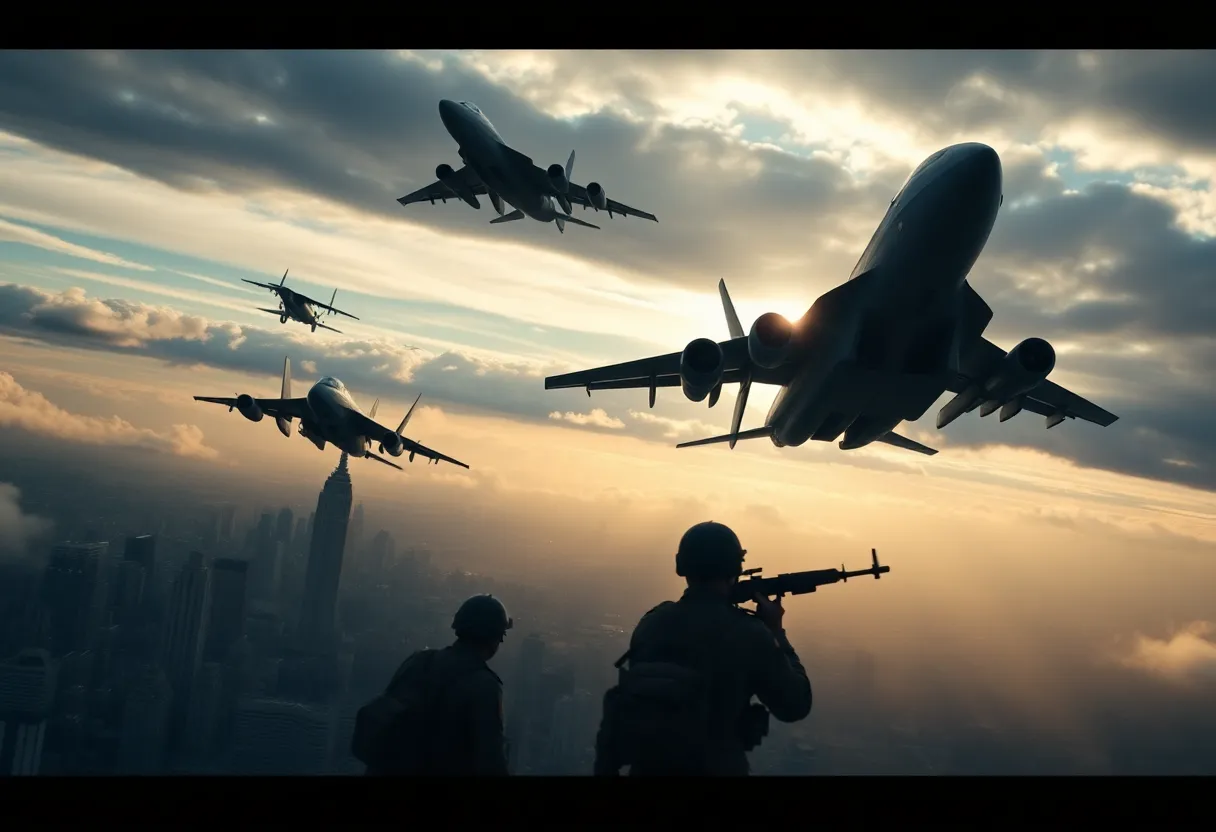
The operation showcased military capabilities rarely seen in contemporary American foreign policy, involving roughly 150 aircraft performing airstrikes aimed at dismantling Venezuelan air defenses, subsequently followed by helicopter-borne troop insertions in Caracas. This sizable offensive not only signals a shift in U.S. military strategy but also prompts a closer examination of what such unilateral decisions mean for the delicate balance of power between the executive and legislative branches.
Military Operation Overview
The military operation on January 2 marked a significant escalation in U.S. involvement in Venezuelan affairs, which has been increasingly unstable over recent years. Trump’s decision to proceed without a formal declaration of war or prior consultation with Congress models a controversial approach to executive military power. Legal experts have underscored that such actions could set a dangerous precedent, eroding the checks and balances that have long governed U.S. military engagements.
Constitutional Implications
The U.S. Constitution explicitly grants Congress the power to declare war, serving as a foundational check on the president’s ability to engage in military action. Critics have voiced concerns that bypassing this congressional authority undermines democratic principles and allows for an unchecked expansion of presidential power. This concern is particularly salient in light of recent Supreme Court decisions that have seemingly broadened the scope of executive authority, notably the 2024 ruling in Trump v. United States, which affirmed that presidents hold absolute immunity for actions deemed within their constitutional authority.
Historical Context of Executive Power
The trend towards expanded presidential powers has been observed across several administrations, raising critical questions about the future of U.S. governance. The balance of power between branches of government is ostensibly designed to prevent any one branch from exercising too much control; however, the military operation in Venezuela brings renewed focus to the necessity of adequate checks to avoid authoritarian tendencies within the executive branch. As this issue continues to unfold, the landscape of legal interpretation of executive actions will likely be tested in courts across the nation.
Public Reactions and Legal Perspectives
Legal experts and constitutional scholars have profoundly critiqued the military operation’s implications. The lack of congressional oversight in such major military decisions could potentially pave the way for future unilateral executive actions without legislative input. This situation incites an essential dialogue regarding the necessity for Congress to reclaim its war powers and emphasizes the need for accountability in matters of foreign policy and military engagements.
The Path Forward
As the military situation in Venezuela stabilizes, the broader implications of Trump’s actions will likely lead to intense legal challenges and further debates within Congress regarding the appropriate limits of executive authority. These discussions are not merely academic; they influence the ethos of American democracy and the framework within which national security decisions are made. Community engagement and awareness surrounding these topics are crucial as the nation assesses its governing principles and the importance of checks and balances in safeguarding against potential overreach.
FAQ
What was the military operation in Venezuela?
On January 2, 2026, President Donald J. Trump authorized a large-scale military operation in Venezuela, resulting in the capture of President Nicolás Maduro. This action was taken without a formal declaration of war or prior congressional approval, raising significant constitutional questions regarding the separation of powers and the limits of executive authority.
What constitutional concerns does this action raise?
The U.S. Constitution grants Congress the authority to declare war, a power that has traditionally served as a check on presidential military actions. By bypassing this process, the administration’s decision has been criticized for undermining the system of checks and balances designed to prevent the concentration of power in the executive branch.
How has the Supreme Court influenced presidential authority?
In recent years, there has been a trend toward expanding presidential authority. Notably, the Supreme Court’s 2024 decision in Trump v. United States affirmed that presidents have absolute immunity for actions within their constitutional authority, including military decisions. This ruling has been interpreted by some as a broadening of executive power, potentially setting a precedent for future unilateral military actions by the president.
What are the reactions to the administration’s actions?
Legal experts and constitutional scholars have expressed alarm over the administration’s actions, warning that such moves could erode democratic principles and the balance of power among the branches of government. Critics argue that the lack of congressional oversight in military decisions could lead to unchecked executive power and diminish the role of the legislative branch in matters of war and peace.
What is the potential impact on the balance of power in the U.S. government?
The recent military operation in Venezuela underscores the ongoing debate over presidential authority and the constitutional limits of executive power. As the situation develops, it is anticipated that further legal challenges and discussions will arise concerning the appropriate balance between the executive and legislative branches in matters of national security and foreign policy.
Key Features of the Military Operation in Venezuela
| Feature | Description |
|---|---|
| Operation Date | January 2, 2026 |
| Target | President Nicolás Maduro of Venezuela |
| Military Assets Deployed | Approximately 150 aircraft, airstrikes, helicopter-borne troops |
| Congressional Approval | None obtained prior to the operation |
| Constitutional Concerns | Potential violation of the separation of powers and checks and balances |
| Supreme Court Influence | Recent decisions expanding presidential authority, including Trump v. United States (2024) |
| Reactions | Criticism from legal experts and constitutional scholars regarding the erosion of democratic principles |
| Potential Impact | Ongoing debate over the balance of power between executive and legislative branches in matters of national security and foreign policy |
Deeper Dive: News & Info About This Topic
HERE Resources
Los Angeles Democrats Condemn U.S. Military Action in Venezuela
U.S. Military Operation Captures Nicolás Maduro
Los Angeles Residents on High Alert Over Masked Individuals
Timely Shipping Tips for the Holiday Season in Los Angeles
FBI Urges ICE Agents to Enhance Self-Identification Measures
Educators Challenge Terminations Over Social Media Opinions
Candace Owens Challenges Gag Order Over Charlie Kirk’s Death
Controversy Erupts Over Call for Armed Resistance Against ICE
Controversial Theories Emerge Following Tragic Death
USC Faces Significant Financial Challenges Ahead

Author: STAFF HERE LOS ANGELES WRITER
The LOS ANGELES STAFF WRITER represents the experienced team at HERELosAngeles.com, your go-to source for actionable local news and information in Los Angeles, Los Angeles County, and beyond, specializing in "news you can use" with coverage of product reviews for personal and business needs, local business directories, politics, real estate trends, neighborhood insights, and state news affecting the area—with deep expertise from years of dedicated reporting and strong community input, including local press releases and business updates, while delivering top reporting on high-value events like the Academy Awards, LA Auto Show, and Los Angeles Marathon, extending coverage to key organizations such as the Los Angeles Area Chamber of Commerce and the Los Angeles Tourism & Convention Board, plus leading businesses in entertainment and technology like Warner Bros. and SpaceX, and as part of the broader HERE network including HEREAnaheim.com , HERECostaMesa.com , HEREHuntingtonBeach.com , and HERESantaAna.com , providing comprehensive, credible insights into Southern California's dynamic landscape. HERE Anaheim HERE Beverly Hills HERE Coronado HERE Costa Mesa HERE Hollywood HERE Huntington Beach HERE Long Beach HERE Los Angeles HERE Mission Viejo HERE San Diego HERE Santa Ana