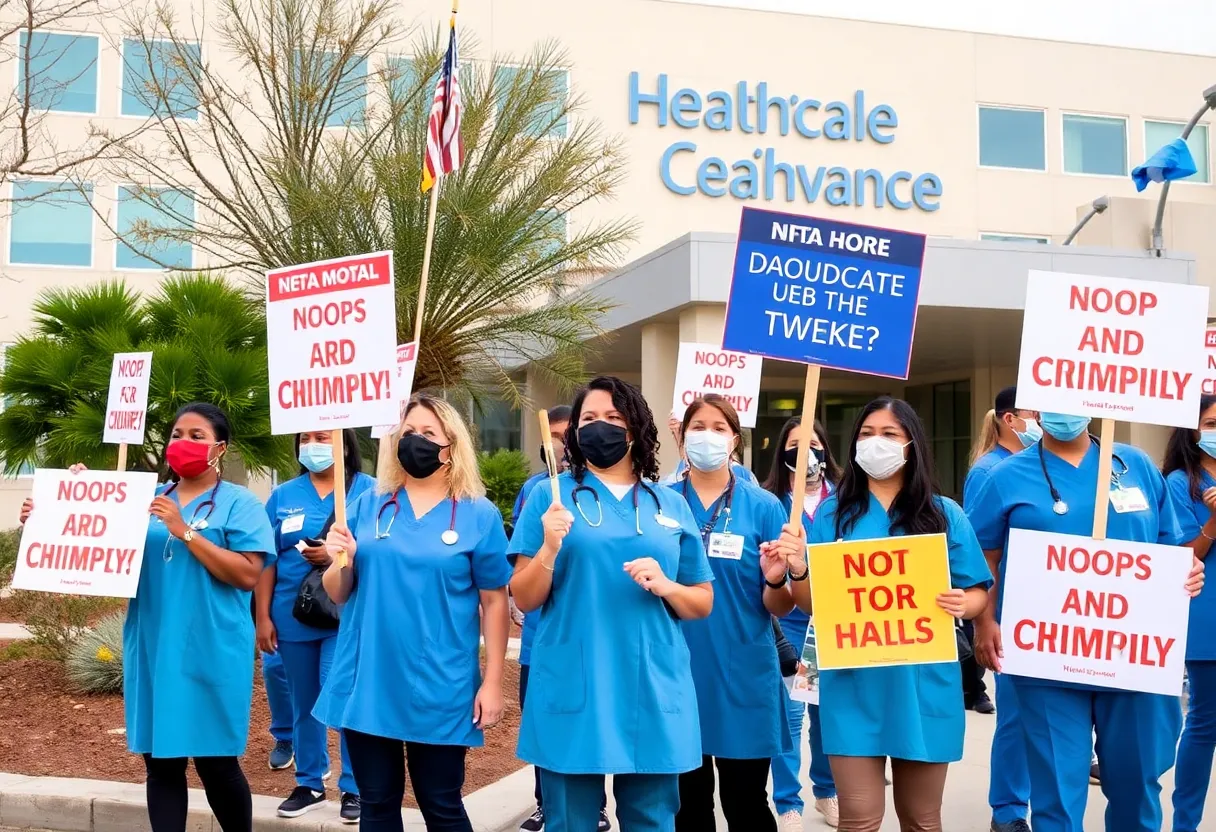
Southern California, February 10, 2026
Thousands of Kaiser Permanente pharmacy and laboratory employees in Southern California initiated an Unfair Labor Practice strike on February 9, joining over 30,000 nurses already on strike. The United Food and Commercial Workers union announced that the employees are protesting labor violations during contract negotiations. Kaiser management has walked away from negotiations for more than a month, disrupting operations and leading to some pharmacy and lab closures. Kaiser is working to minimize disruption by enhancing staffing support and shifting certain appointments to virtual care.
Los Angeles, California – February 10, 2026
Kaiser Permanente Employees Strike in Southern California
Thousands Join Walkout Amid Contract Negotiation Stalemate
Thousands of Kaiser Permanente pharmacy and laboratory employees in Southern California initiated an Unfair Labor Practice (ULP) strike on February 9, 2026, joining over 30,000 nurses and healthcare professionals already on strike since January 26, 2026.
The United Food and Commercial Workers (UFCW) union announced that pharmacy assistants, pharmacy technicians, clinical lab scientists, and medical lab technicians at numerous facilities across Los Angeles, Orange, San Diego, San Bernardino, Riverside, Ventura, and Kern counties commenced the strike at 7 a.m. on February 9. The workers are protesting alleged labor violations during contract negotiations that have hindered the establishment of fair contracts for frontline healthcare workers.
Negotiation Timeline
Negotiations have been stalled for more than a month after Kaiser management walked away from the bargaining table. In December 2025, UFCW and other unions within the Alliance of Healthcare Unions filed Unfair Labor Practice charges with the National Labor Relations Board (NLRB), claiming that Kaiser unlawfully refused to engage in negotiations, thereby undermining the agreed-upon national bargaining process established since April 2025.
Impact on Operations
Kaiser Permanente indicated that the strike currently involves UFCW unions representing 2,424 pharmacy employees and 929 clinical lab scientists in Southern California. While facilities have remained open throughout the earlier UNAC/UHCP strike, the latest action is anticipated to lead to the closure of some pharmacies and labs. Administrative shifts have resulted in some appointments moving to an online format, while certain non-urgent procedures have also been rescheduled.
Kaiser Permanente’s Response
In response to the strikes, Kaiser Permanente has taken measures to minimize disruption. They have expanded contracted services, enhanced staffing support, and made proactive outreach to members with timely updates and guidance. The healthcare provider has emphasized that hospitals, emergency departments, and all medical offices remain operational, while members still have access to 24/7 same-day care through its “Get Care Now” feature. To prioritize urgent needs, certain appointments have been temporarily relocated to virtual care platforms.
Community Support and Staffing Initiatives
Employees across the organization are stepping in to assist. Many from other regions have volunteered to temporarily relocate to Southern California to support local operations during this challenging period. Leadership teams are actively monitoring operations, adjusting staffing as necessary to ensure that patients continue to receive essential care during the labor action.
Patient Guidance During the Strike
Patients are advised to regularly visit the Kaiser Permanente website for updates on facility operations. For non-urgent medical needs, members are encouraged to utilize the “Get Care Now” feature. For urgent medical situations, patients should reach out to their healthcare provider or visit the nearest emergency department.
FAQ
What is the reason for the Kaiser Permanente pharmacy and lab employees’ strike in Southern California?
The strike is in response to alleged labor violations during contract negotiations that have hindered the establishment of fair contracts for frontline healthcare workers. Negotiations have been stalled for more than a month after Kaiser management walked away from the bargaining table. In December 2025, UFCW and other unions with the Alliance of Healthcare Unions filed Unfair Labor Practice charges with the National Labor Relations Board (NLRB), alleging that Kaiser unlawfully refused to bargain in an attempt to bypass the agreed-upon national bargaining process and interfere with good-faith negotiations that had been ongoing since April 2025.
Which facilities are affected by the strike?
The strike involves Kaiser Permanente pharmacy and laboratory employees at numerous facilities across Los Angeles, Orange, San Diego, San Bernardino, Riverside, Ventura, and Kern counties in Southern California. While some pharmacies and labs are expected to be closed, hospitals, emergency departments, and all medical offices have remained open. Some appointments have been shifted online, and certain non-urgent procedures have been rescheduled.
How is Kaiser Permanente responding to the strike?
Kaiser Permanente has expanded contracted services, strengthened staffing support, and taken proactive steps to reach out to affected members with timely updates, guidance, and support. The company emphasized that hospitals, emergency departments, and all medical offices have remained open, though some pharmacies and labs will be closed. Members continue to have 24/7 access to same-day care through the “Get Care Now” feature on kp.org and the mobile app. To best support patients, some appointments have been temporarily shifted to virtual care, and certain non-urgent procedures have been rescheduled to focus resources on urgent and emergent needs.
What should patients do during the strike?
Patients are advised to visit the Kaiser Permanente website for the latest information on facility operations. For non-urgent medical needs, members can utilize the “Get Care Now” feature on kp.org and the mobile app. For urgent medical concerns, patients should contact their healthcare provider or visit the nearest emergency department.
| Feature |
Description |
| Strike Initiation |
Thousands of Kaiser Permanente pharmacy and laboratory employees in Southern California began an Unfair Labor Practice (ULP) strike on February 9, 2026, joining over 30,000 nurses and healthcare professionals already on strike since January 26, 2026. |
| Union Involvement |
The United Food and Commercial Workers (UFCW) union announced that pharmacy assistants, pharmacy technicians, clinical lab scientists, and medical lab technicians at numerous facilities across Southern California commenced the strike at 7 a.m. on February 9, 2026. |
| Allegations |
Negotiations have been stalled for more than a month after Kaiser management walked away from the bargaining table. In December 2025, UFCW and other unions with the Alliance of Healthcare Unions filed Unfair Labor Practice charges with the National Labor Relations Board (NLRB), alleging that Kaiser unlawfully refused to bargain in an attempt to bypass the agreed-upon national bargaining process and interfere with good-faith negotiations that had been ongoing since April 2025. |
| Operational Impact |
Kaiser Permanente stated that the latest strike involves UFCW unions representing 2,424 pharmacy employees and 929 clinical lab scientists in Southern California. While facilities have remained open throughout the UNAC/UHCP strike, this latest action is expected to result in the closure of some pharmacies and labs. Some appointments have been shifted online, and certain non-urgent procedures have been rescheduled. |
| Company Response |
Kaiser Permanente has expanded contracted services, strengthened staffing support, and taken proactive steps to reach out to affected members with timely updates, guidance, and support. The company emphasized that hospitals, emergency departments, and all medical offices have remained open, though some pharmacies and labs will be closed. Members continue to have 24/7 access to same-day care through the “Get Care Now” feature on kp.org and the mobile app. To best support patients, some appointments have been temporarily shifted to virtual care, and certain non-urgent procedures have been rescheduled to focus resources on urgent and emergent needs. |