

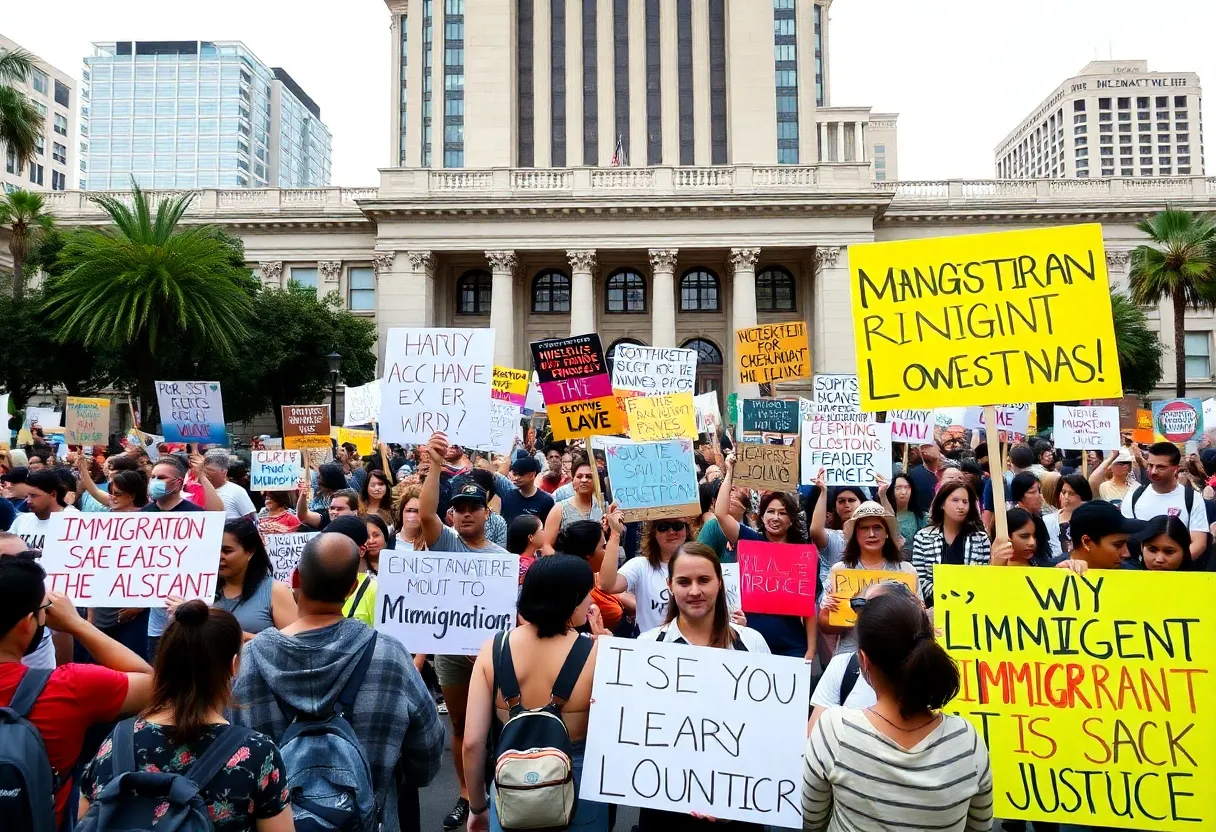
Los Angeles, January 31, 2026
Los Angeles joined a nationwide protest called the ‘National Shutdown,’ demanding a halt to federal immigration enforcement after tragic incidents involving federal agents. The protests, led by various activist groups, highlighted community resilience and the potential for local businesses to take a stand for social justice. Despite some clashes with law enforcement, the overall movement aims to foster dialogue around immigration policies and community safety, with future demonstrations planned to continue this important discourse.
Los Angeles, CA
Nationwide Protests Spark Dialogue on Immigration Policies
On January 30, 2026, Los Angeles took part in a nationwide “National Shutdown,” protesting federal immigration enforcement amid tragic incidents that shook communities across the country. The protests were galvanized by the fatal shootings of individuals Alex Pretti and Renee Good by federal agents in Minneapolis, leading to widespread demonstrations in various cities, including downtown Los Angeles. The events remind us of the resilience of communities as they come together to voice their concerns and advocate for the rights of immigrants, while also presenting an opportunity to discuss the delicate balance of immigration enforcement and community safety.
Local businesses and cultural institutions played a significant role during these protests, showcasing how entrepreneurs can be allies in social movements. As they closed their doors in solidarity, these actions highlighted a sense of communal responsibility and engagement that is essential for the economic and social fabric of Los Angeles. The protests and responses can serve as a catalyst for future conversations around how government policies affect local economies and community relations.
Protests and Clashes with Law Enforcement
The demonstration in downtown Los Angeles drew thousands of protesters to City Hall, where individuals called for the withdrawal of federal immigration agents from their neighborhoods. Although the majority of actions were peaceful, tensions escalated when some participants threw objects at law enforcement officers. This led to a tactical alert by the police and the deployment of chemical irritants to disperse crowds. Similar actions unfolded in other major U.S. cities, evidencing the widespread discontent with Immigration and Customs Enforcement (ICE) operations.
Business and Cultural Institutions Close in Solidarity
Several businesses and cultural institutions throughout Los Angeles closed in support of the “National Shutdown.” Notable closures included the Museum of Contemporary Art (MOCA) and the Fahey/Klein Gallery, both citing concerns over access during protests. This collective action from local establishments underscores the increasingly proactive role that businesses can play in social justice initiatives. By standing in solidarity with the movement, these businesses not only demonstrate their commitment to community values but also encourage an environment that fosters dialogue around the impacts of federal immigration policies.
Background on the “National Shutdown” Movement
The “National Shutdown” movement blossomed in response to recent federal actions regarding immigration enforcement, particularly following the distressing incidents in Minneapolis. Advocating for a cessation of ICE operations, the movement has gained traction among activist groups, including CODEPINK Los Angeles, prompting discussions regarding the implications of immigration policies on local businesses and the safety of immigrant communities. This grassroots movement is a testament to the potential for collective action to influence policy and advocate for the rights of community members.
Nationwide Impact and Future Protests
The impact of the “National Shutdown” promises to resonate well beyond January 30, with organizers already planning additional protests, including the forthcoming “No Kings” protest on March 28. Envisioning participation from up to 9 million individuals nationwide, these demonstrations seek to further challenge federal immigration policies and promote safety for immigrant communities. As communities across the United States engage in this critical discourse, the potential for meaningful change becomes clearer, highlighting the essential connection between social movements and economic landscapes.
Key Features of the “National Shutdown” Protests
| Feature | Description |
|---|---|
| Protest Locations | Downtown Los Angeles, including City Hall and other public spaces |
| Organizers | Various activist groups advocating for immigrant rights, including CODEPINK Los Angeles |
| Business Participation | Several local businesses and cultural institutions closed in solidarity with the protests |
| Law Enforcement Response | Deployment of chemical irritants to disperse crowds during confrontations |
| Future Plans | Third round of “No Kings” protests scheduled for March 28, aiming to mobilize up to 9 million participants nationwide |
Conclusion
As the “National Shutdown” movement illustrates, the intersection of local business participation and community activism is crucial for the dialogue surrounding immigration policies. Los Angeles stands as a testament to the power of collective action, urging residents to engage in thoughtful discussions that can shape future economic policies and community relations. Support for local businesses, along with active participation in community initiatives, can pave the way for a more empathetic and economically resilient city. We encourage Angelenos to remain informed and engaged as these critical issues continue to evolve.
Frequently Asked Questions (FAQ)
-
What is the “National Shutdown” movement?
The “National Shutdown” is a nationwide protest movement that began in response to recent federal immigration actions, including the fatal shootings of Alex Pretti and Renee Good by federal agents in Minneapolis. The movement calls for a halt to ICE operations and the abolition of the agency, citing concerns over excessive force, detention abuses, and the militarization of immigration enforcement. Activist groups have organized demonstrations and encouraged businesses to close in solidarity with the movement.
-
What were the main locations of the protests in Los Angeles?
In downtown Los Angeles, thousands of protesters gathered at City Hall, chanting and holding signs demanding the withdrawal of federal immigration agents. The demonstrations turned confrontational when some protesters threw bottles at law enforcement officers. Authorities responded with a tactical alert and deployed chemical irritants to disperse the crowd.
-
Which businesses and cultural institutions participated in the “National Shutdown”?
Several Los Angeles businesses and cultural institutions closed in solidarity with the “National Shutdown,” including the Museum of Contemporary Art (MOCA), Fahey/Klein Gallery, and Vidiots. These closures reflect a broader movement where businesses, particularly small and locally owned, are advocating for immigrant rights.
-
What are the future plans for the “National Shutdown” protests?
The “National Shutdown” protests have seen significant support across the country. Future protests, including a third round of “No Kings” protests scheduled for March 28, aim to mobilize millions of participants nationwide, reflecting the growing movement challenging federal immigration policies.
Deeper Dive: News & Info About This Topic
HERE Resources
Record Number of Immigration Raids in Southern California
Los Angeles Archbishop Advocates for Immigration Reform
Protests Erupt in Downtown LA Following Tragic Shooting
Backlash Against U.S. Attorney’s Comments on Shooting
CSU Settles Lawsuit with Faculty Union on Privacy Protection
Federal Agents Fire Shots During Immigration Operation in Los Angeles
Protesters Stage ‘Free America Walkout’ Across Southern California
Los Angeles Gears Up for 2026 Homeless Count Amid Declining Trends
Highland Park Protests Against Immigration Enforcement
Santa Ana Protest Incident Leaves College Student Permanently Injured

Author: STAFF HERE LOS ANGELES WRITER
The LOS ANGELES STAFF WRITER represents the experienced team at HERELosAngeles.com, your go-to source for actionable local news and information in Los Angeles, Los Angeles County, and beyond, specializing in "news you can use" with coverage of product reviews for personal and business needs, local business directories, politics, real estate trends, neighborhood insights, and state news affecting the area—with deep expertise from years of dedicated reporting and strong community input, including local press releases and business updates, while delivering top reporting on high-value events like the Academy Awards, LA Auto Show, and Los Angeles Marathon, extending coverage to key organizations such as the Los Angeles Area Chamber of Commerce and the Los Angeles Tourism & Convention Board, plus leading businesses in entertainment and technology like Warner Bros. and SpaceX, and as part of the broader HERE network including HEREAnaheim.com , HERECostaMesa.com , HEREHuntingtonBeach.com , and HERESantaAna.com , providing comprehensive, credible insights into Southern California's dynamic landscape. HERE Anaheim HERE Beverly Hills HERE Coronado HERE Costa Mesa HERE Hollywood HERE Huntington Beach HERE Long Beach HERE Los Angeles HERE Mission Viejo HERE San Diego HERE Santa Ana